Blog›Yoga
Yoga pour soulager la douleur : postures pour dos et douleurs chroniques

José Luis Martínez Moreno
Rédacteur de contenu bien-être & spécialiste éditorial
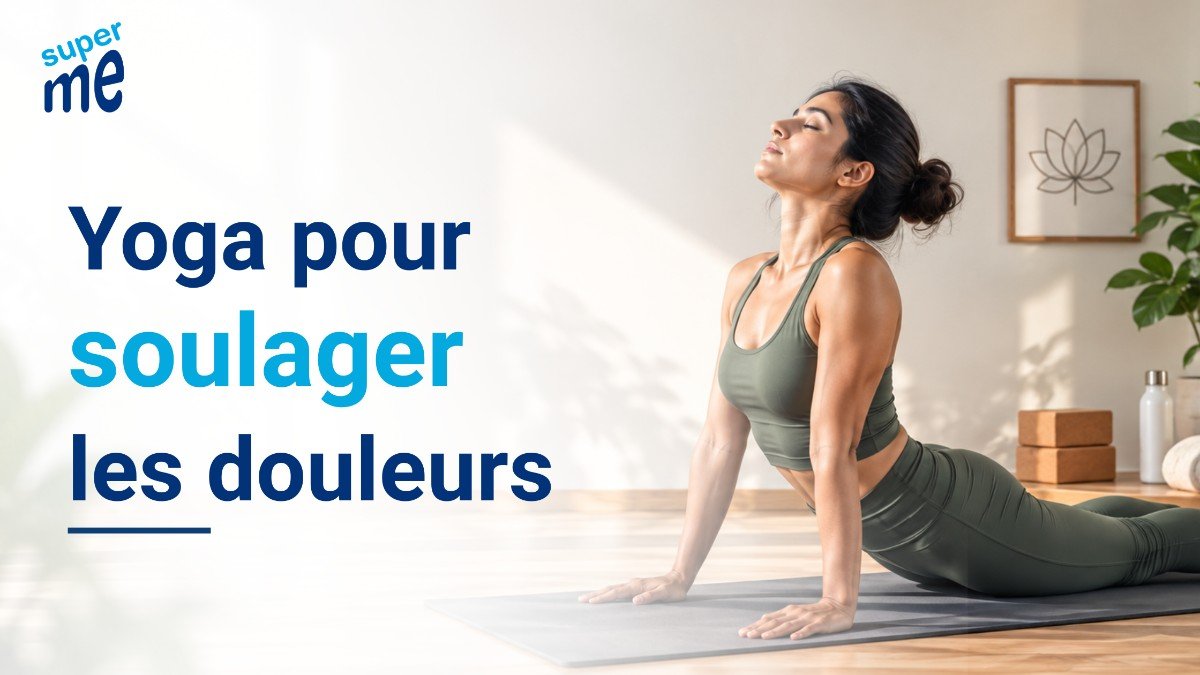
Yoga for pain relief is much more than just a wellness trend. Yoga can be a practical and accessible way to manage chronic and everyday physical pain, such as lower back pain, neck tension, and joint stiffness.
If you are looking for a gentle, low-impact way to manage your pain and better understand your body without doing high-intensity exercise, yoga can help.
In this article, we will understand how yoga helps relieve pain, what types of pain can benefit from yoga, some yoga poses for beginners, and how to build a simple routine for regular practice.
How does yoga help relieve pain?
Yoga acts on pain in three different ways: physical, neurological, and psychological.
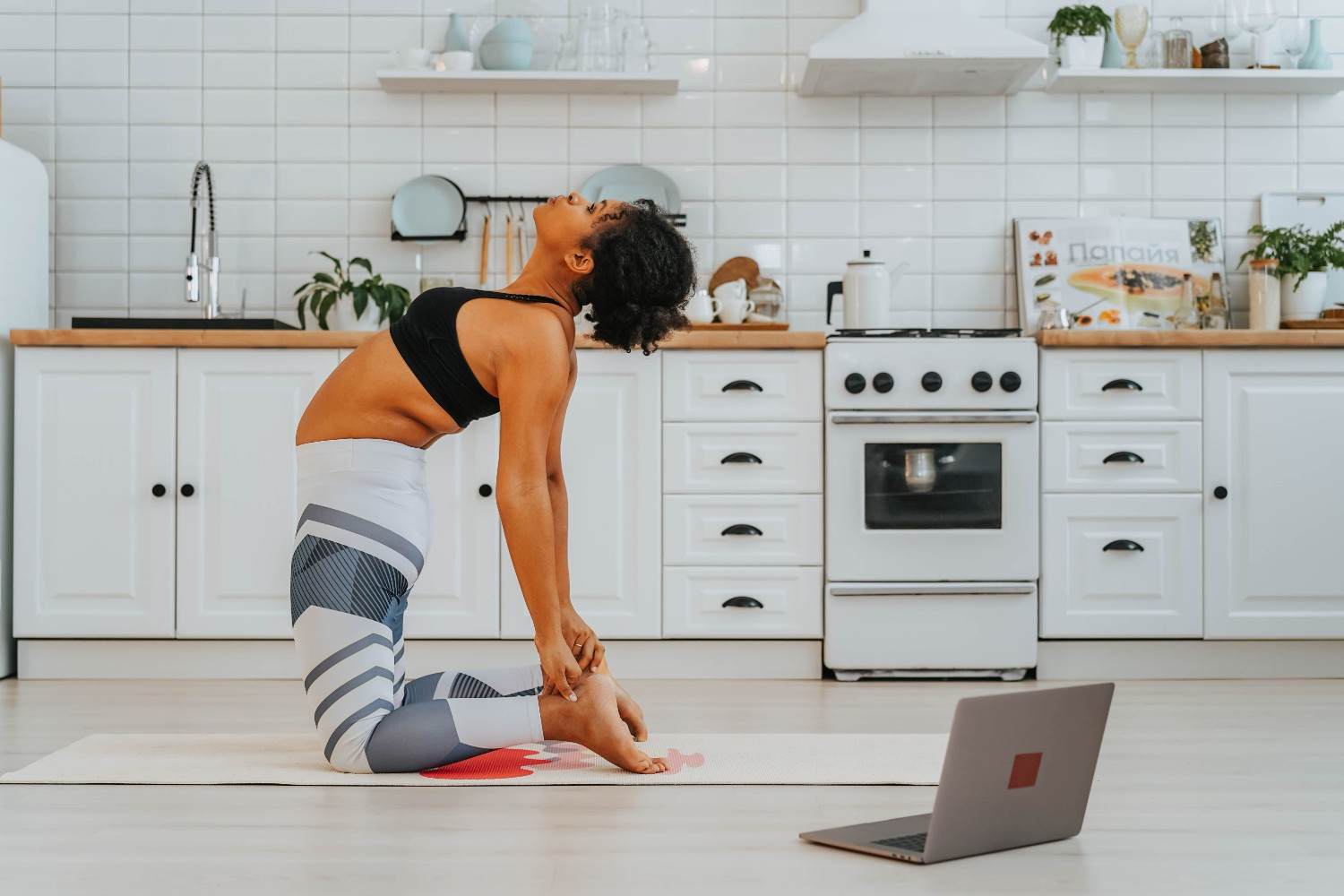
Physically, yoga helps stretch and strengthen the muscles that support the spine, hips, and joints. When the hamstrings are tight, the core muscles are weak, or poor posture is present, it can cause pain. Yoga helps work on these areas through various movements and asanas.
Neurologically, practicing yoga regularly can help reduce the hypersensitivity of the nervous system that can develop with chronic pain. The gentle movements send signals to the brain indicating that the movement is safe, which can help reduce the fear of movement.
Psychologically, breathing and mindfulness in yoga help to calm the mind and body. This can help reduce stress and also change how we think about and react to pain. This can help a person better manage pain.
What types of pain can yoga help relieve?
Yoga for pain relief shows particularly interesting results in the following areas:
Lower back pain
This is one of the most studied applications of yoga. Yoga strengthens the core and spinal muscles, improves posture, and reduces muscle tension in the lumbar region. Appropriate muscle activation in yoga can also promote more controlled movements and greater stability. Several randomized controlled trials demonstrate significant improvements in pain levels and functional limitations.
Neck and upper back pain
A 2024 systematic review showed that yoga, when combined with other appropriate therapies, can be effective in reducing the intensity of neck pain and functional limitations. Postures that target the cervical spine and upper back may be particularly helpful.
Joint pain and osteoarthritis
Gentle yoga can reduce joint stiffness and improve range of motion without placing significant mechanical stress on the joints. A 2024 meta-analysis of eight studies on knee osteoarthritis showed improvements in pain and physical capacity.
Generalized chronic pain
Yoga's effect on the nervous system can be helpful in situations involving widespread pain sensitivity. Its mind-body approach addresses both the physical and psychological aspects of chronic pain.
Yoga for pain relief: a comparison with other pain management approaches
| Condition | Recommended postures | Main benefit |
|---|---|---|
| Lower back pain | Cat-Cow, Child's Pose, Bridge | Relieves spinal pain, strengthens core body support |
| Neck and shoulder tension | Cat-Cow, Threading the Needle, Puppy Pose | Relieves neck tension |
| Hip and joint stiffness | Pigeon pose, Figure four seated | Opens the hip flexors, reduces the load on the joints |
| General chronic pain | Restorative Yoga, Savasana, Spinal Twist | Soothes the nervous system, reduces sensitivity |
5 yoga poses for beginners to relieve pain, step by step
These poses are suitable for beginners and target the most common painful areas. Perform the movements slowly, breathe during each position, and stop if you feel sharp pain or a sudden release of tension.
1. Cat-Cow Pose (Marjaryasana-Bitilasana) – For the back, neck and spine
Start on all fours: hands under shoulders and knees under hips.
Inhale, let your belly drop towards the mat and lift your head and tailbone (Cow pose).
Exhale, round your spine towards the ceiling and tuck your chin in (Cat).
Repeat slowly for 10 to 15 breaths. This is an excellent warm-up for the spine.
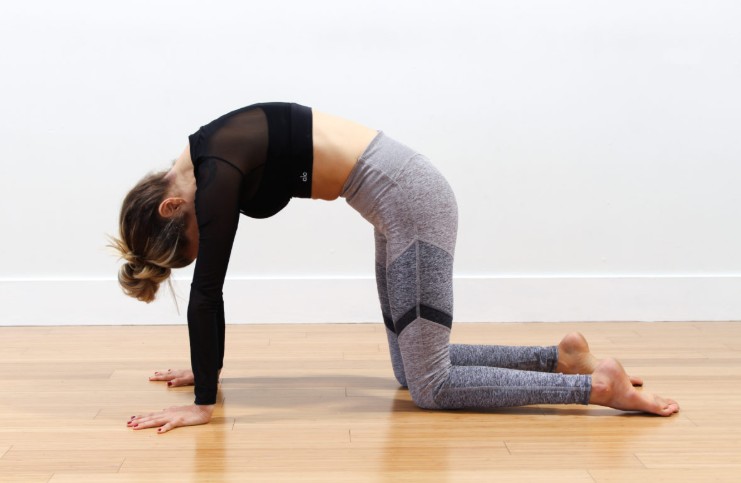
Image Source: The Yoga Collective
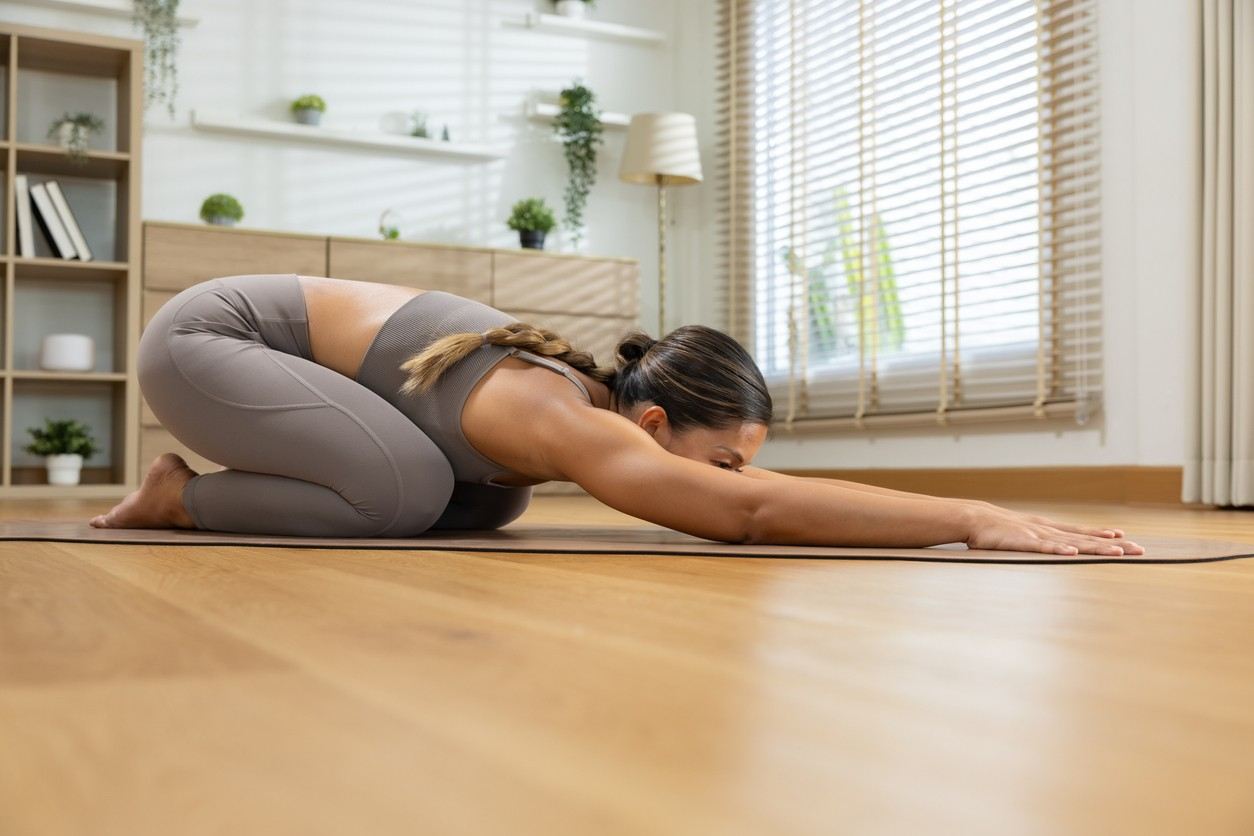
2. Child's Pose (Balasana) – For the lower back and hips
From the four-legged position, sit back on your heels and extend your arms forward.
Place your forehead on the mat and breathe deeply.
Hold the position for 30 seconds to 2 minutes. This helps to release tension in the lower back and hips.
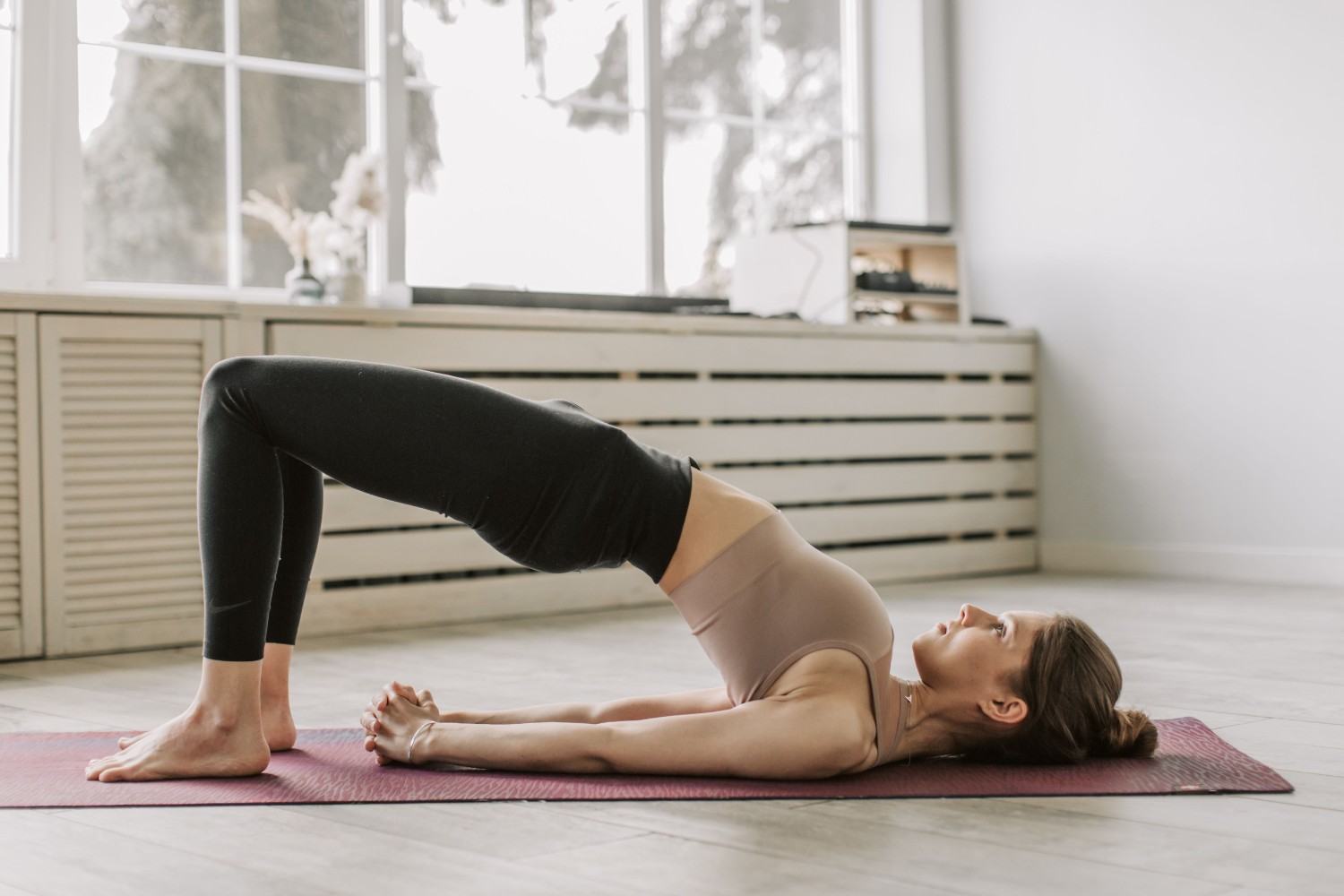
3. Bridge Pose (Setu Bandhasana) – For the lower back and buttocks
Lie on your back with your knees bent and feet flat on the floor, hip-width apart.
Press down on your feet and lift your hips off the mat.
Hold the position for 20 to 30 seconds, then slowly lower yourself back down. This posture strengthens the posterior muscle chain.
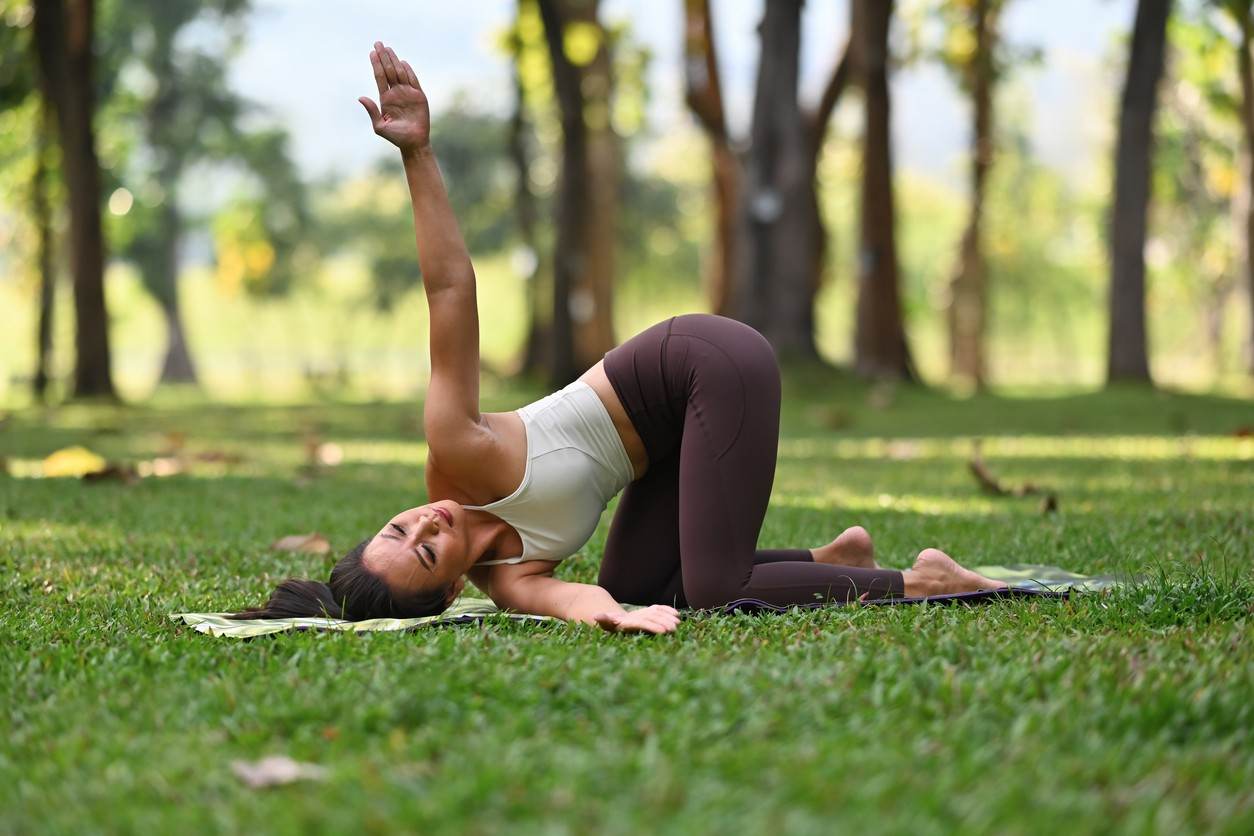
4. Threading the needle – For the upper back and shoulders
Start on all fours. Slide your right arm under your left arm, palm facing up.
Lower your right shoulder and cheek towards the mat.
Hold the position for 30 seconds. Repeat on the other side. This helps release tension in the chest area.
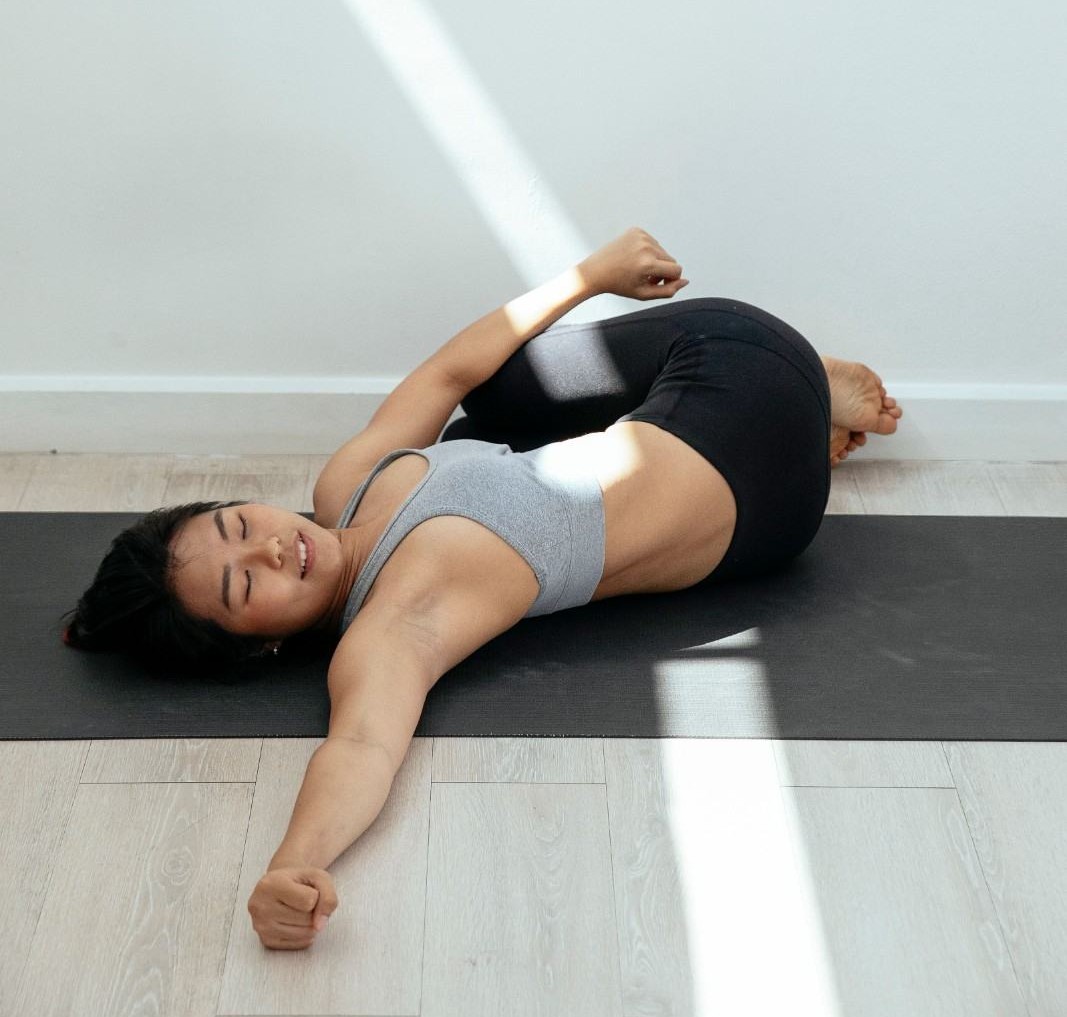
5. Spinal Twist (Supta Matsyendrasana) – For the back and hips
Lie on your back. Bring your right knee towards your chest, then bring it to your left side.
Extend your right arm to the side and look to the right if that is comfortable.
Hold the position for 30 to 60 seconds, then switch sides. This helps restore spinal mobility.
How to build a sustainable yoga routine to relieve pain
One of the most common mistakes is starting with an overly ambitious practice. Consistency is more important than intensity, especially when it comes to managing pain.
Start with 10 to 15 minutes, 3 to 4 times a week. This may be enough to start seeing results.
Focus on slow, controlled movements, paying attention to your breathing.
Note how you feel your pain before and after each session.
Don't force yourself into a posture. Slight discomfort may be normal, but sharp pain is not.
Consult your doctor or physiotherapist before starting if you have a diagnosed condition, disc problems, osteoporosis, or a recent injury.
Want to go further? The MySuperMe method
Understanding why your body experiences pain is the first step toward lasting relief. At MySuperMe , our approach combines scientifically based movements and personalized support to help you build a sustainable wellness routine that fits your real life.
Learn to listen to your body's signals and respond to them instead of fighting them.
Understand the link between stress, posture, and chronic pain.
Build a personalized exercise program with the help of a coach who listens to you.
Whether you are experiencing persistent discomfort or simply want to move better and feel stronger, our programs are designed for beginners and those resuming a wellness routine after a long break.
Recommended reading:
Key points to remember
Yoga for pain relief is supported by clinical research, particularly for lower back pain, neck pain, and certain joint pains.
It works through a combination of physical strengthening, nervous system regulation, and stress reduction.
Poses suitable for beginners, such as Cat-Cow, Child's Pose, Bridge, Threading the Needle and Spine Twist, are a good starting point.
Regularity (3 to 4 times per week) is more important than duration or intensity.
Yoga can complement medical care. Always consult your doctor for complex health issues.
Frequently Asked Questions
José Luis Martínez Moreno
Rédacteur de contenu bien-être & spécialiste éditorial
José Luis Martínez Moreno est rédacteur éditorial et spécialiste du contenu, avec plus de 25 ans d’expérience en journalisme, recherche et création de contenu numérique. Il crée des contenus documentés et optimisés pour le SEO autour du bien-être, du mode de vie et du développement personnel.
LinkedIn →